
September is a time for dahlias, the beautiful flowers that emerge in so many forms from collarette and mignon to ball, stellar, novelty and giant forms. To set off your dahlias for a good show at home or on the road as a gift for a friend, here are four flower tips: A) Flower Preserving Tonic, B) Tangy Sweet Bouquet Scents, C) Foundational Greens for Height, Sway and Froth, and D) a simple two step shortcut on how to Build a Bouquet.
A Reveln Gardens Instagram clip is below for a taste of the results and samples of the greens and flowers, after cutting 107 dahlias for a non-profit staff event:
More examples on Instagram, with better video resolution. The stills are crisp in the above video.
https://www.instagram.com/reel/DOJwdhLEU22/?igsh=MTFoeGxodGg3Y3BvcQ==
A) Flower Preserving Tonic
Before you place your dahlias at the table, mix up a natural flower preserving tonic to help extends the life of your blooms. This simple tonic is made of just these three ingredients, in the following proportions:
Kirk’s Flower Preserving Tonic 1
- Sugar (Two tablespoons)
- Vinegar (Two tablespoons)
- Two drops of bleach (1/2 tsp)
________________________
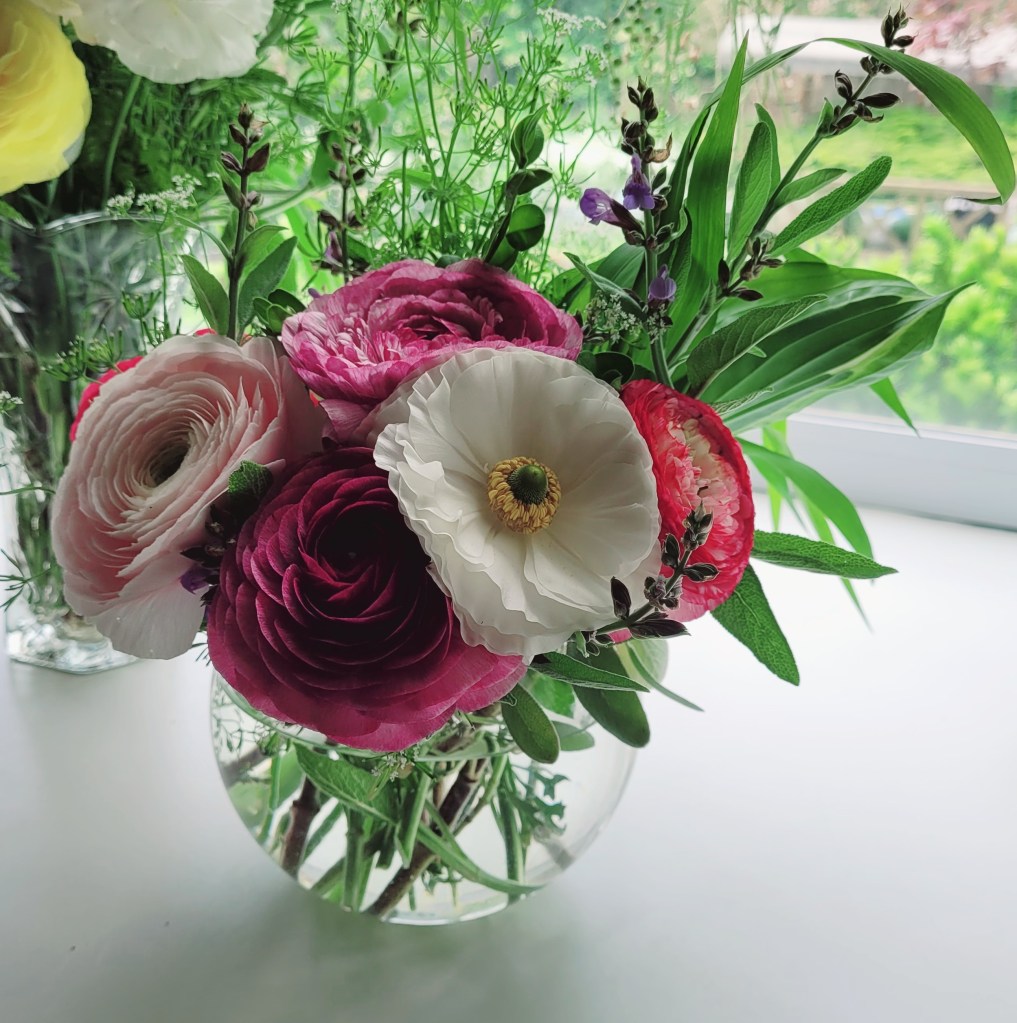
Add these ingredients to ONE gallon of fresh, clean water. Stir until the sugar dissolves. You can easily halve the recipe for a a 1/2 gallon, as well, which works well for a pitcher-full to use with 3-5 bouquets of flowers.
I often mix up at least a gallon of this tonic when I go to market with my ranunculus in early spring as well as with my carload of dahlia bouquets and singles as fall approaches. I use this water in all my vases as I prepare them for transport to market.
B) Tangy Sweet Bouquets Scents
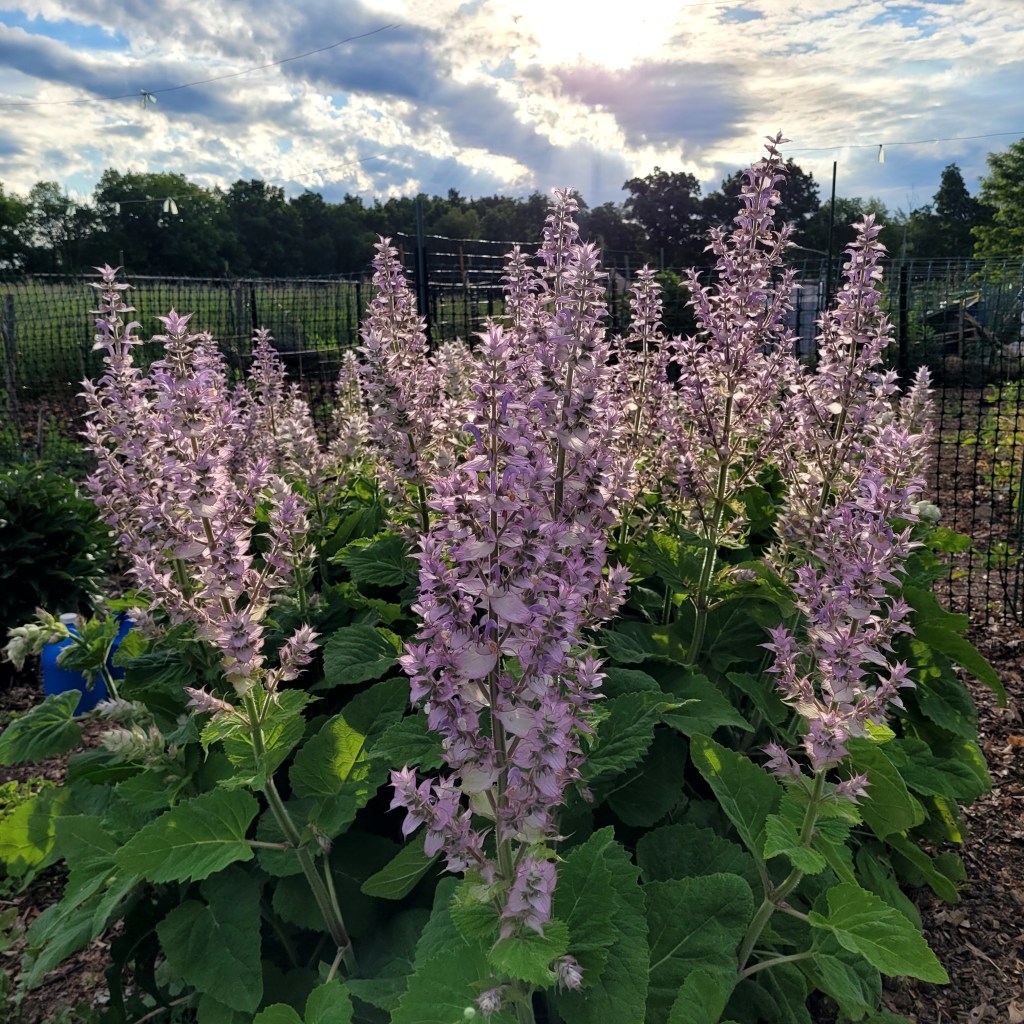
I often see people trying to get a whiff of a dahlia scent from my blooms arrayed for display. Like many showy flowers, dahlias have very little scent. In nature, scented flowers often are short lived, like stock, with its spicy, rich scent suggesting cinnamon and cloves, or lily of the valley with its luscious, honey sweet fragrance. For dahlias, I find enriching them with scented greenery provide a sense of completeness to a bouquet. When my first big bouquets of Clary Sage come into bloom (pictured above), the heady herbal and earthy scent of this robust plant often brings in customers drawn to a table of its blooms. My current scent favorites to add to bouquets in order for this season are:
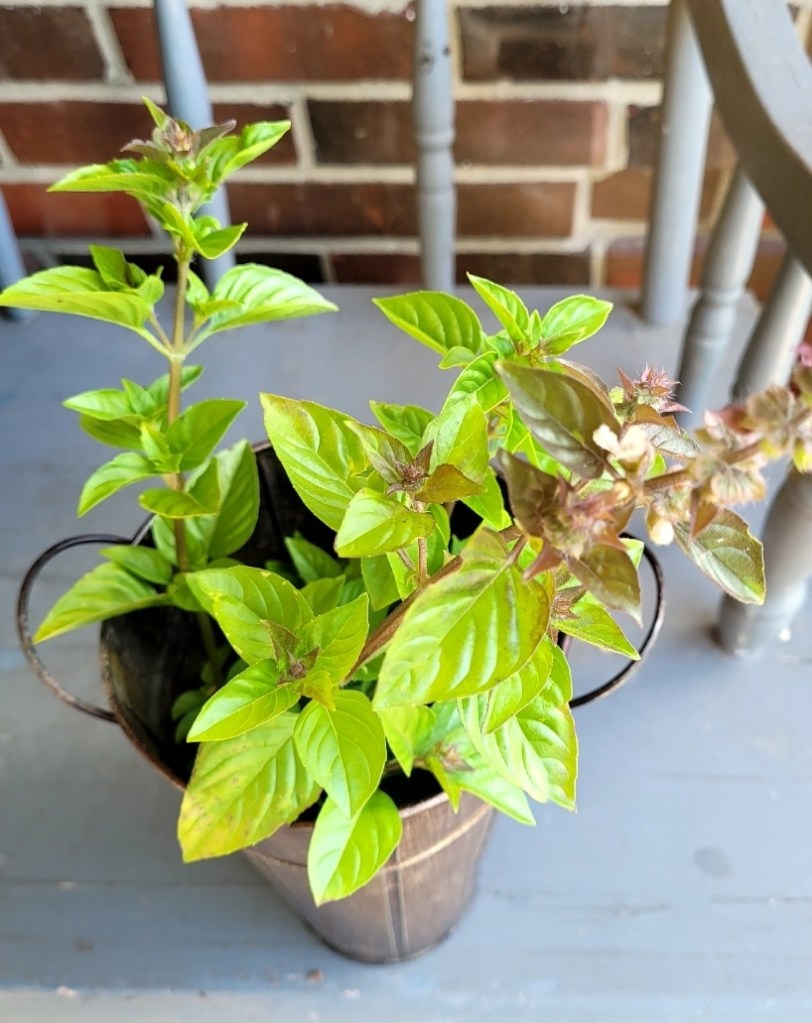
- Lemon basil (lemony, and a tangy addition to tomato dishes when the flowers fade)
- Chocolate mint (big fave for many chocolate lovers)
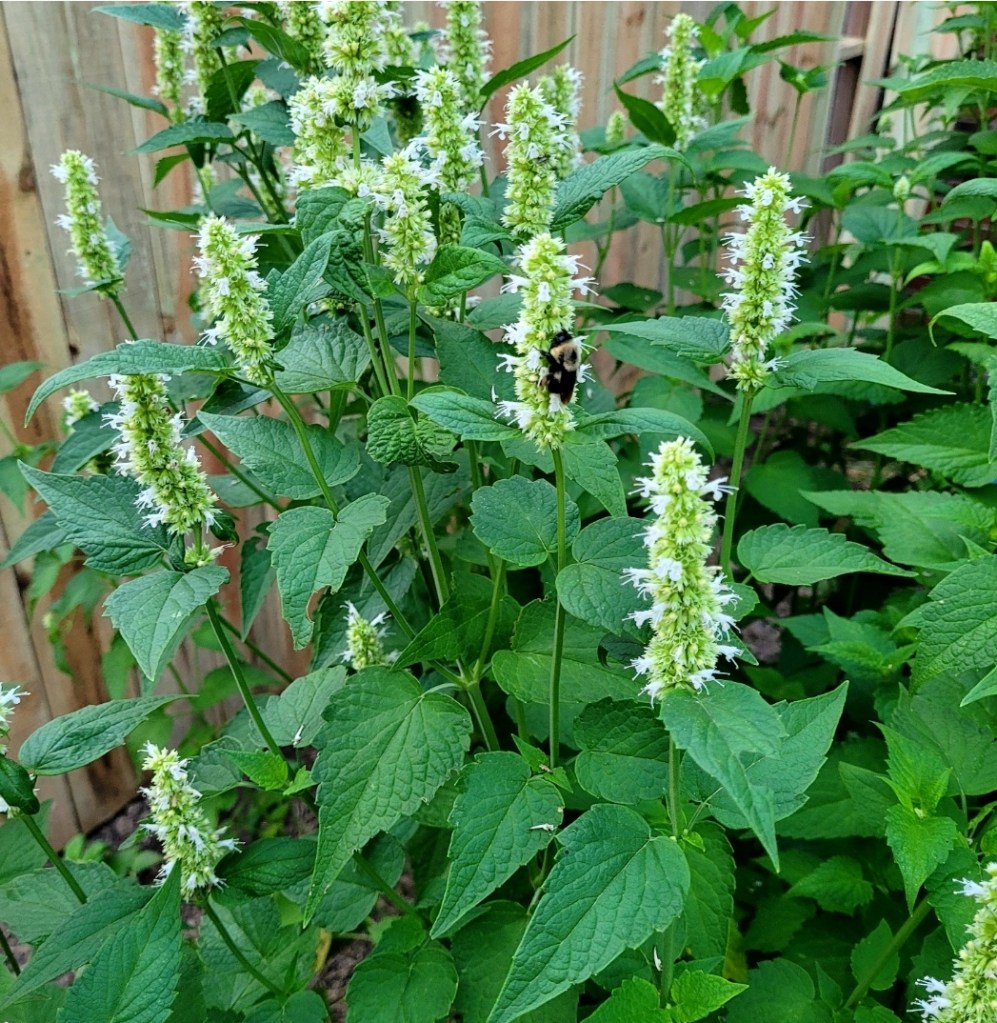
- Agastache (spicy licorice mint)
- Cardinal basil (spicy basil with green foliage topped with a crown of reddish leaves)
- Clary sage (earthy, sweet musk, herbal), especially the variety Salvia sclarea v. turkestanica
- Salvia microphylla ‘Hot Lips’, aka Hot Lips Sage (exotic, sweet black currant scent) 2 3
C) Foundational Greens for Height, Sway and Froth

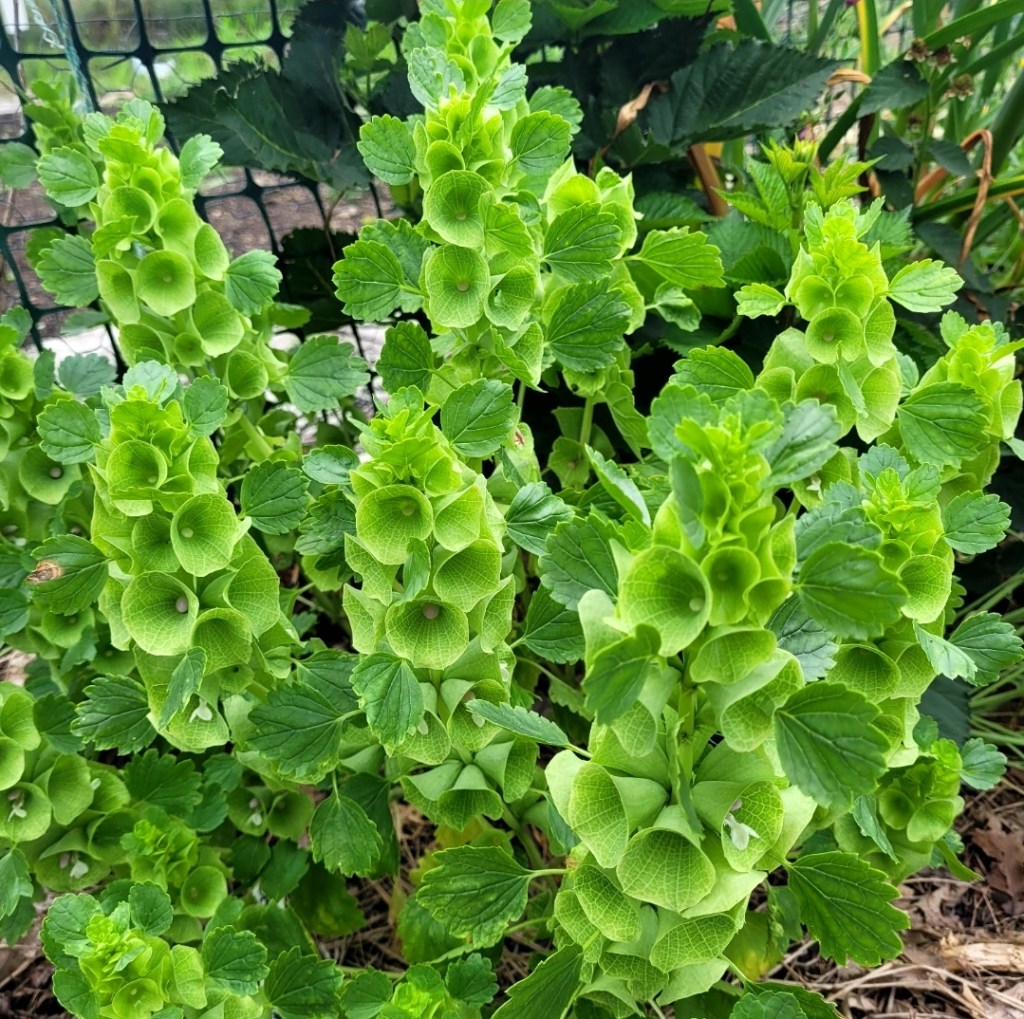
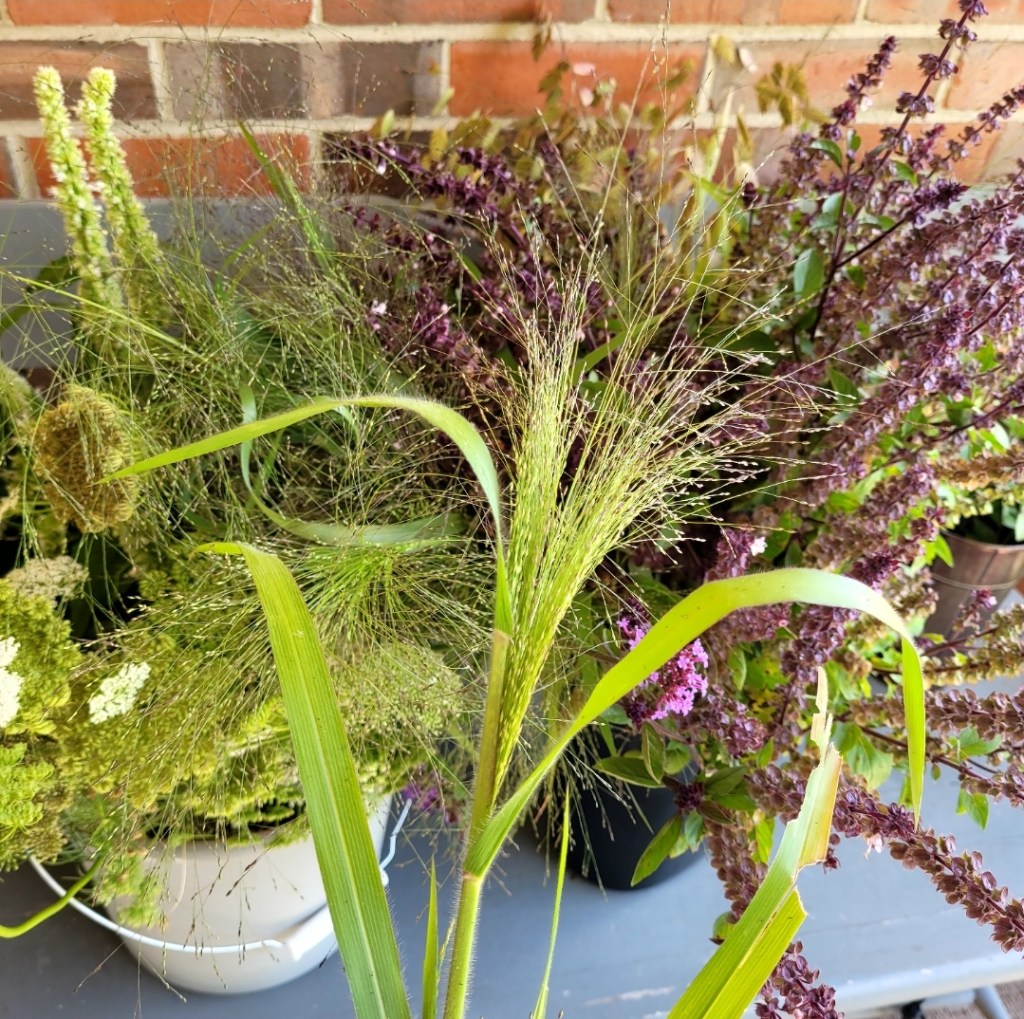

Besides the scent and the amazing beauty of dahlias, starting by building the “stage” or background of greenery in bouquets helps the stars of the show shine. Dazzler dahlias like “Fired Up” or “Elks Lips on Fire” or striking forms of semi-cactus form dahlias like Camano Sitka or Star’s Favorite are best featured with a foundation of greens. Many greens are so versatile that a single green stem paired with a delicate water lily like Day Dreamer completes the mood.
Yes, by themselves, dahlia blooms are lovely to hold, and yet a simple addition of a few bits of greenery like Boxwood, Ninebark or grasses like Northern Sea Oats or Frosted Explosion add a “supporting actor” foundation of beauty to a simple or complex bouquet. I’ve seen soon-to-be customers captivated by spotting one of my bundles of grasses from a distance, Northern Oats, swaying in the breezes at market. What’s next? That person is now table-side requesting a small bouquet just to enjoy the movement and sway of elegant fall grasses with their selected blooms.
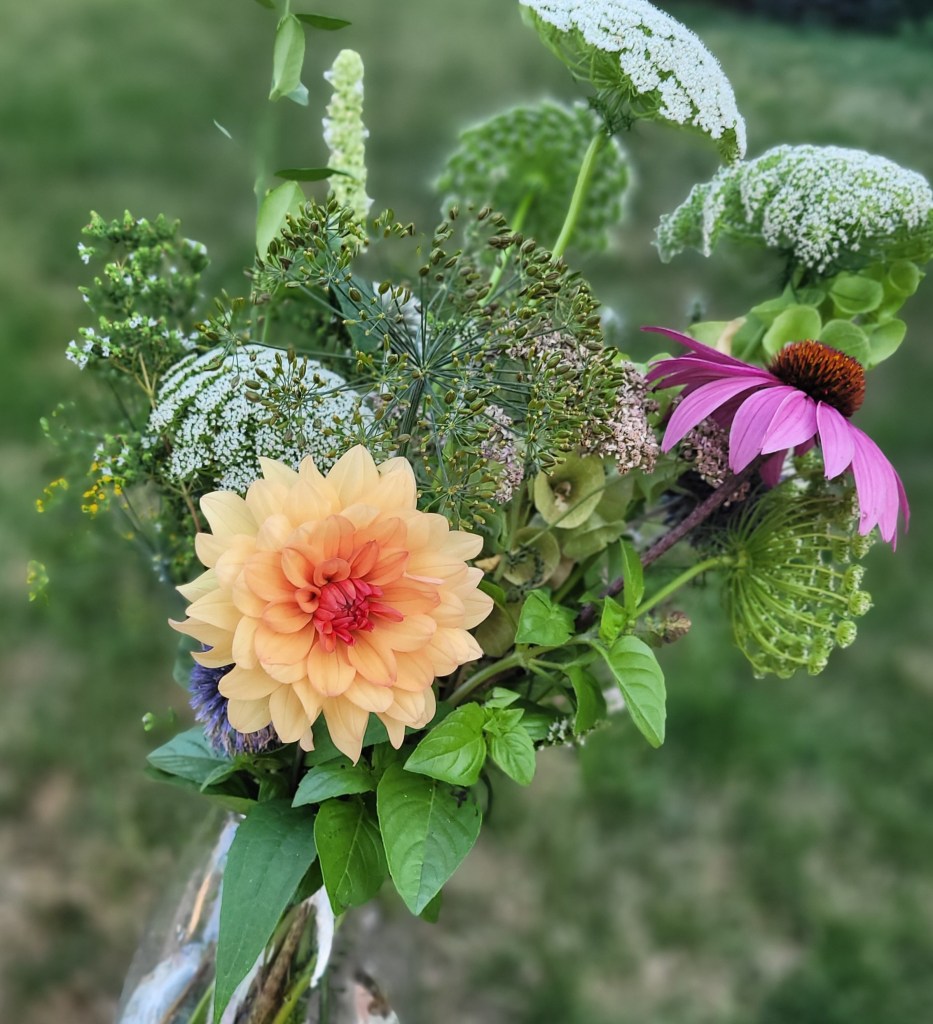
Even with just one bloom, a bit of Frosted Explosion grass, with its optical effects type frothy tips elevates the dahlia to be much more in a simple, small vase. I understand some flower growers fuss because Frosted Explosion grass can easily self-seed and pop up all around the garden. I have not found this grass to be aggressive, however. It’s more of a welcome surprise where and when I find it. As a site coordinator of a group of 20 Project Grow gardeners, I usually spot a handful of these frothy grasses popping up in plots of a new gardeners who have gotten behind on their weekly weeding. No problem. If it is growing by a path, I simply snip a sprig for one of my next bouquets. It holds its shape even when dried.
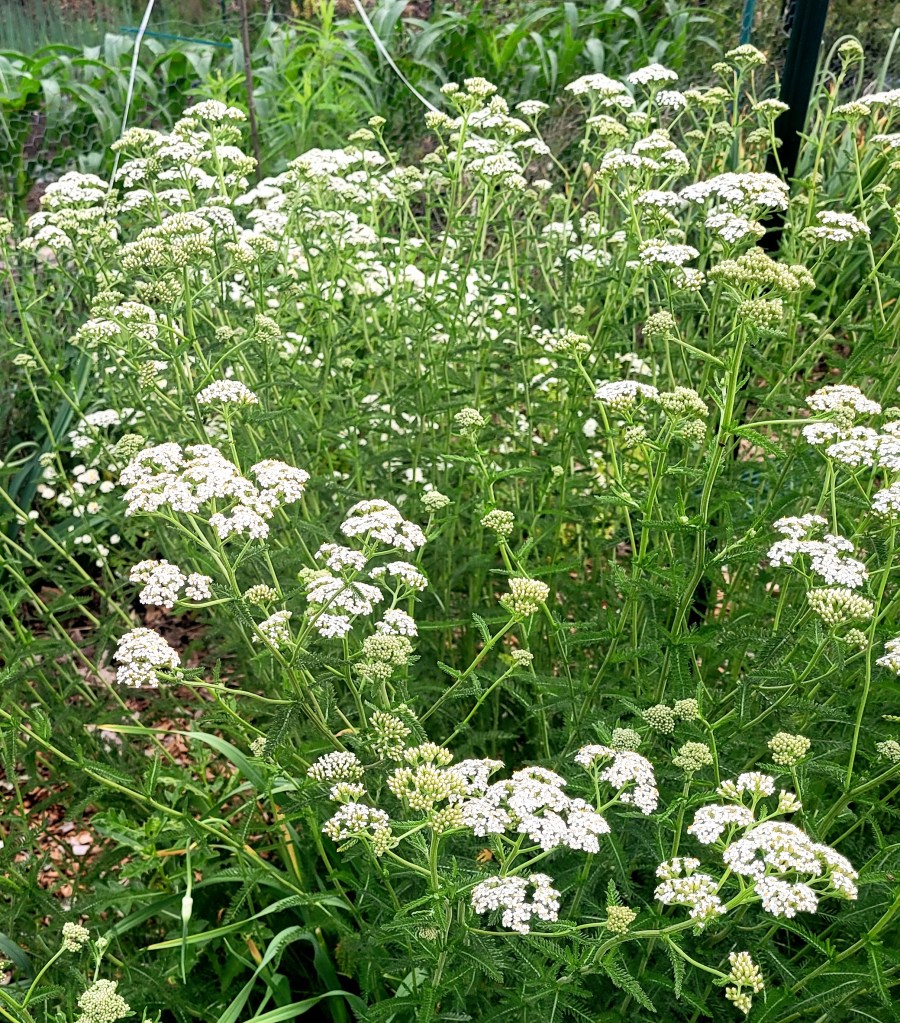
When customers buy just flowers, and not greens, to take home, I also encourage them to look at their shrubbery to take a snip to tuck in with their flowers to help the bouquet come alive with a natural frame of green. Contrasting shapes such as a spikey flower or greens for height (Agastache), frothy or airy contrasts like Feverfew or Pearl yarrow or billowy grasses, provide a pleasing contrast in a vase along with your showy dahlia.
D) Building a Bouquet
Here the shortlist list, two main steps:
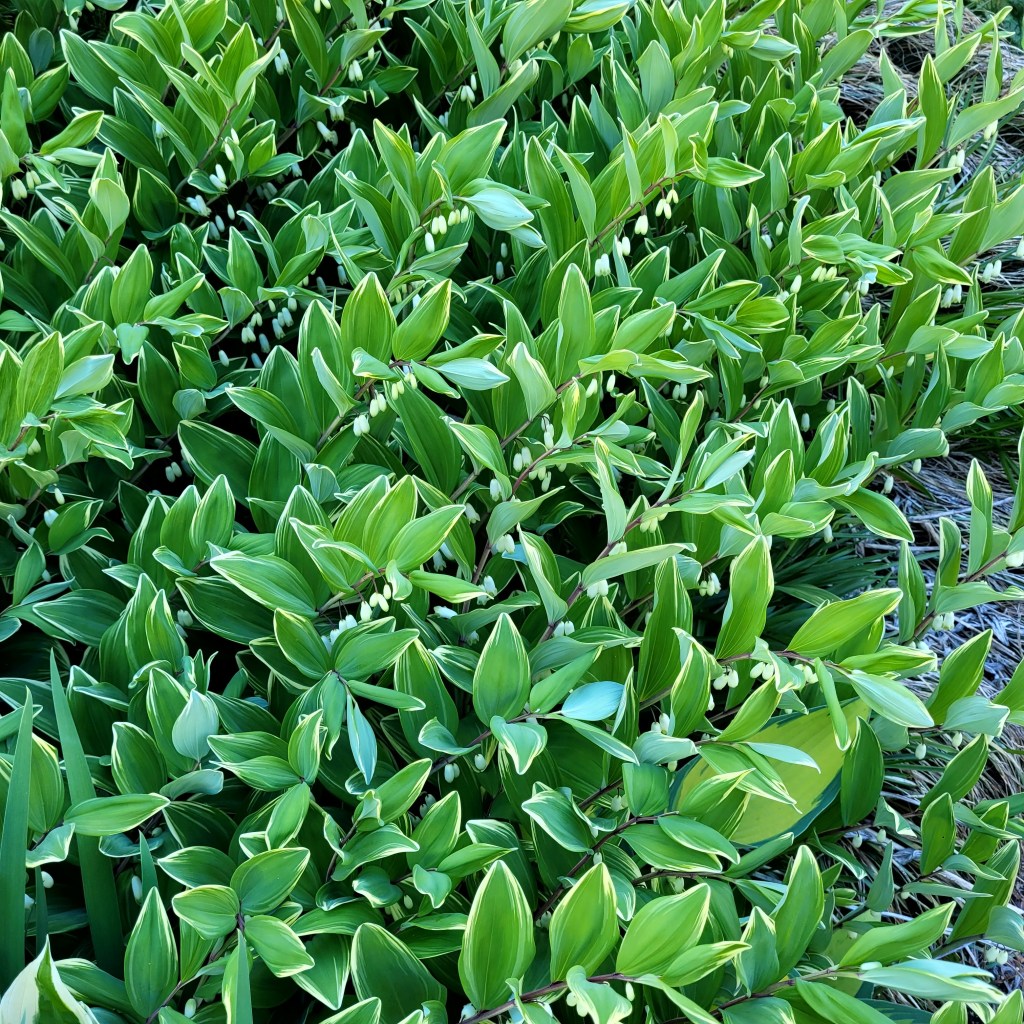
- Accents and Greens: Select an appropriately sized vase or jar, fill it with the flower tonic. Next, clip a selection of greens and supporting flowers and lay them out on a table. Start adding your greens to establish the height, texture, considering secondary colors in your design. Think about scent too. Choices could include Agastache, Basil, Clary Sage, Globe Thistle, Northern Oat Grass, Oregano, Queen Anne’s Lace & Ammi, Solomon’s Seal, Verbena bonariensis and Yarrow. Dried flowers like Statice or Nigella also work well.
You can also use clippings from shrubbery like Yew, Boxwood. Also try Silver Artemisia, Hosta leaves or a sprig of Miscanthus grass. A single Hydrangea flower works as a grid to hold your greens. For hydrangeas, soak the bloom and branch in a bucket of water and add powdered alum to the cut end before you put it in a vase. It will keep it from drying out and drooping. As fall is approaching, try making a dried flower arrangement as well.
- Add your chosen focal flower(s) to finalize the tone of your bouquet: a showy dahlia, rose, large zinnia or happy sunflower, or dried strawflowers and yarrow.


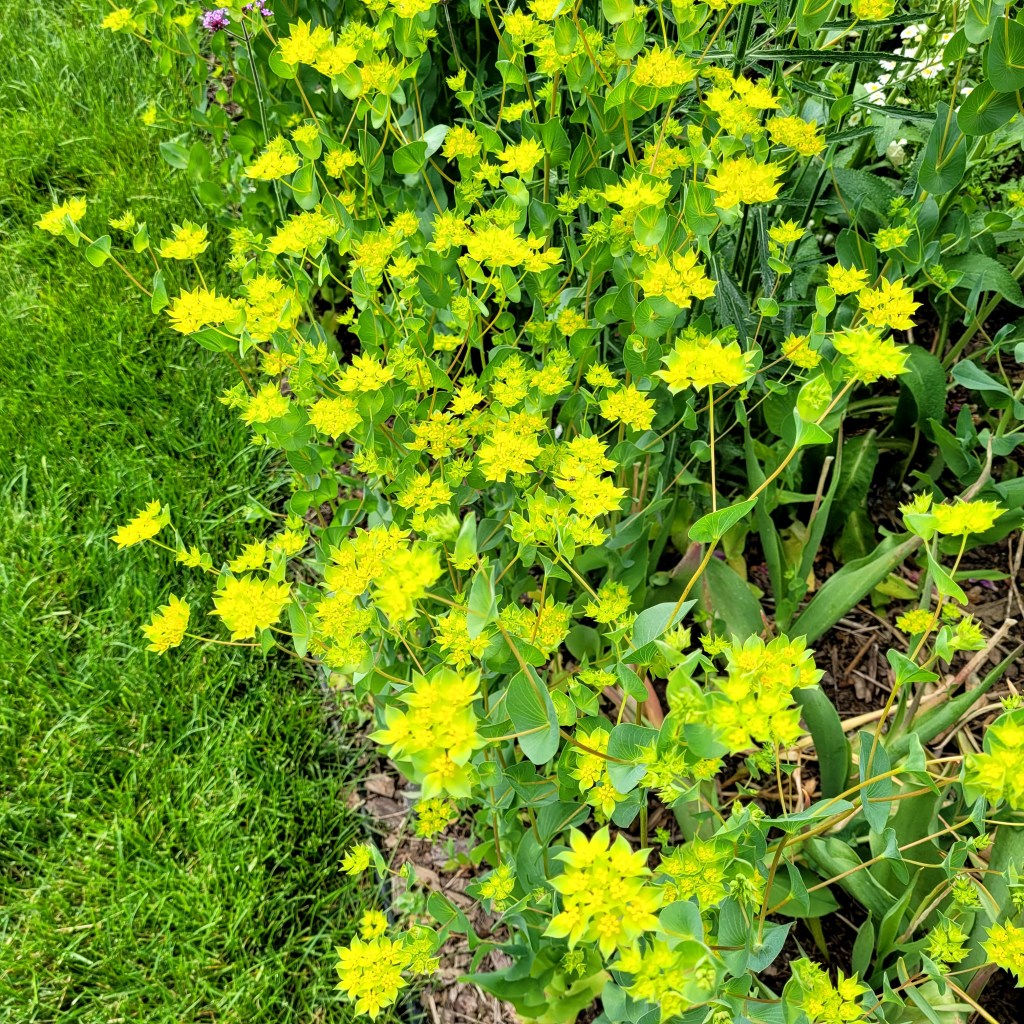


I hope these tips will also inform your garden planning for your future bouquets. If these tips are helpful to you, feel free to pass it the link in emails and social media. As always, comments are welcome, including what works best for you when putting together your fall bouquets.
Notes:
- This flower tonic recipe is courtesy of Kirk Jones, now retired from flower farming and managing our local community gardens organization, Project Grow Gardens in Ann Arbor, Michigan. He continues to make bouquets and enjoy flowers of many types, including dahlias and supporting greens and flowers like “White Wonder,” a favorite, foundational green Feverfew I recently shared with him as seeds and as a plant. ↩︎
- ‘Hot Lips’ sage is only lower on my foundational flower list because I didn’t grow it this season, as it is a tender perennial in zone 6a, and I have to make cuttings to overwinter it every season indoors. That said, I miss its exotic, nectar-sweet blackcurrant scent and plan to grow it from seed. Perhaps I will winter sow it in 2026. ↩︎
- If you haven’t discovered Winter Sowing, check out my Top Ten Steps to Winter Sowing blog post list that serves as an “anytime” virtual course on the topic. It includes illustrations, a SlideShare and video featuring the benefits of Winter Sowing including how to:
* Save money growing more expensive perennial plants from seed,
* Garden outdoors successfully in winter in temperate climates (Zones 5-7),
* Take advantage of winter light, and
* Cold stratify your seeds that many perennials seeds need, resulting in beefy, robust seedlings ready to plant in spring.
↩︎
This work is licensed under a Creative Commons Attribution-NonCommercial-NoDerivatives 4.0 International License.
 Reveln Consulting