Agile Leader Learning for Sustainable Change: Best Models to Adapt to Change

You’ve probably experienced it, that uncomfortable feeling of letting go of something tried and formerly true without knowing what is coming next. Welcome to the Neutral Zone, coined by change writer William Bridges1 who helped us understand the human element in Change and Transitions.

In the 21st century, it’s important to  unlearn what no longer meets the needs of your clients and customers. Creating a “quiet mind” to understand what will meet those needs is one the best things you could do to adapt, become more agile and to stay relevant in today’s business world. Coaching with iterative practice and using fractals as a model for learning are a two ways to build an adaptive learning approach that also happens to be flexible, most likely far cheaper and is less prone to the scarcity and rigidity traps of conventional certification programs and training. More examples are listed below.

Continue reading “Agile Leader Learning for Sustainable Change: Best Models to Adapt to Change”
Change and Endings: Letting Go and Acceptance before New Beginnings

Successful transition through endings is a necessary skill in the 21st century.  A William Bridges classic gives insights into helping endings succeed.

<This post is part one of a two-part series on William Bridge’s Transitions change approach, with related change models and business examples.>

Sometimes an ending is a major, transformative revelation for a business, such as when CEO Darwin Smith exclaimed they needed to shut down the paper mills leading the shift to a new way of doing business.  

Continue reading “Change and Endings: Letting Go and Acceptance before New Beginnings”

Change, Innovators, Creativity and Community, Will it Blend?

As the technology age moves us along, innovation has been heralded as one of the few growth spaces left, and the power of community, think social media, is the other.  

Do they blend?  

Photo by Daria Shevtsova on Pexels.com

Does creativity have a place in how this can happen?

Enter change.  It is important to keep change leadership and innovation separate, but related and integrated so that both qualities assist in successful realization of an organization’s mission & aspirations through taking advantage of the yearnings of its current and future talent.

Sometimes this is really about:

Oh, you 10+ years employees.  You were cool when you were young and energetic, but now we’d really prefer to get more new-thinking, young things in here.  

Current talent, are you really talented anymore?

Continue reading “Change, Innovators, Creativity and Community, Will it Blend?”

The Impact of a Challenging Goal, Parasailing in Key West

Photo by Prachi Gupta on Pexels.com

If you’re trying to be miserable, it’s important you don’t have any goals.

  • No school goals, personal goals, family goals.
  • Your only objective each day should be to inhale and exhale for 16 hours before you go to bed again.
  • Don’t read anything informative, don’t listen to anything useful, don’t do anything productive.
  • If you start achieving goals, you might start to feel a sense of excitement, then you might want to set another goal, and then your miserable mornings are through.

~ John Bytheway

Continue reading “The Impact of a Challenging Goal, Parasailing in Key West”

Knowledge, Passion and Power: 3 Simple Change Principles to Release It

Photo by Trace Hudson on Pexels.com

Leverage is a reason that leaders use when choosing to work in collaboration as well as hire consultants, who have the skills of helping leaders see multiple perspectives.  This is especially an asset when dealing with difficult, complex, even wicked problems. 

This quote rings true in our experience with change projects:   “If knowledge is power, clandestine knowledge is power squared; it can be withheld, exchanged, and leveraged.” ~ Letty Cottin

Continue reading “Knowledge, Passion and Power: 3 Simple Change Principles to Release It”

Joining Social Media Ecosystems, Learning the Ropes

Happy Social Media Day!  It’s a great day to share learning about on-line communities. Pam covers the opportunities and challenges you may encounter in finding a good fit and taking right action in find the right relationships on-line, as well as the a social media culture & style that works for you.

Continue reading “Joining Social Media Ecosystems, Learning the Ropes”

Change Leaders: Why Should Anyone Trust Your Vision? John Kotter and Harvard Business Review

John Kotter, a change management thought leader of yore and Harvard professor emeritus, has written books that have helped manage change. He reminds us that the following quote underscores the need to lead from the side and the rear as well as from the front.

A leader is most effective when people barely know he exists. When his work is done, his aim fulfilled, his troops will feel they did it themselves.

~ Lao-tzu
John Kotter at the Global change management conference, ACMP, 2011

There are many change management trends from the first decade of the 21st century that I imagine Dr. Kotter has negotiated in his long career. As I prepared for an Association of Change Management Practitioners conference at the time of writing this post, including editing new videos with change leaders, I wanted to share some of John Kotter’s gems. Below is an excerpt, that highlights some common assumptions about how leaders approach change, still as relevant in the second decade, as they were in the first:

The conventional decide-execute model handles large changes very poorly.

~ John Kotter
Continue reading “Change Leaders: Why Should Anyone Trust Your Vision? John Kotter and Harvard Business Review”

Selecting a Coach: 10 Questions to Ask Your Prospective Coach

Photo by cottonbro on Pexels.com

What are good questions to ask a prospective coach?  I was interviewed by Terry Wisner, BlogTalk radio host recently on the subject.   


I covered the three “Cs” of coaching, also referred to as 3 core competencies of coaching.

Blog Talk Radio Interview

Continue reading “Selecting a Coach: 10 Questions to Ask Your Prospective Coach”

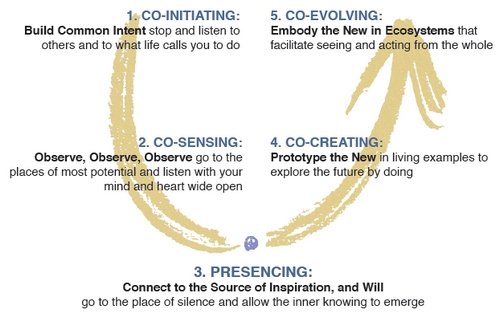
Co-Creation in Theory U: Leading from the Future as it Emerges & the Road to Commitment

Source:  Otto Sharmer and The Presencing Institute

The terms “letting go” and “letting come,” captured my imagination as Theory U arrived on scene several years ago.  The compelling nature of the U model visual added to its allure. 

The concepts that Theory U features are intended to help leaders and managers in the public and private sector break through unproductive patterns of behavior.  This includes breaking through barriers of ignoring their own staff and clients wisdom and other maladies that produce ineffective patterns of decision making.

Continue reading “Co-Creation in Theory U: Leading from the Future as it Emerges & the Road to Commitment”

Entrepreneurial Success in Business, Professor Saras Saravathy and Effectuation

To understand innovation and entrepreneurship, listen to Saras Saravathy, Associate Professor – Darden School of Business, University of Virginia.  She speaks on how to be successful in business, starting  with “entrepreneurship is teachable.”  She has also been featured on TEDxMidAtlantic.

Continue reading “Entrepreneurial Success in Business, Professor Saras Saravathy and Effectuation”